(***1/2)
It’s a solemn piece of history—one that needs to be preserved, studied and remembered. A day that changed the world, and a place that should never be forgotten. Now, this moment in time has been captured and its surroundings carefully documented.
News of Martin Luther King’s assassination caused grief and sparked demonstrations and civil disobedience in 100 American cities. It was dubbed the “Holy Week Uprising.” What’s the backstory? Where did this begin? What’s known is that on April 4, 1968, MLK was shot by James Earl Ray as he stood on the balcony outside his second-floor room at the Lorraine Motel in Memphis, Tennessee. What events led up to that day?
Veteran documentarian and Oscar®-nominated director Sam Pollard (4 Little Girls) takes audiences back to the place, social/political circumstances and people surrounding that day of infamy. His efforts to explore the time and situation are greatly aided by his production team. Writers Alvin Hall, Joe Wemple and Juleyka Lantigua help him reassemble the days preceding the murder. Meticulously, they reconstruct the timeline leading up to the shot that changed the civil rights movement and haunted its aftermath.
Editors R.A. Fedde and Masaya Hirose help him assemble clips, interviews, photos and documents into a coherent narrative. They work meticulously, as if putting shattered pieces of glass back together after it has fallen onto an unforgiving concrete floor. Christopher North’s score adds dramatic flourishes. Cinematographer Henry Adebonojo photographs those who share anecdotes and eyewitness accounts. It’s as if all involved were hoping to raise the spirit of MLK for one more life lesson. Resources are used and dispensed wisely. This is touching, educational filmmaking astutely helmed by Pollard in a griot-like way. Nice pacing. Rhythmic. A coherent narrative. Not ground-breaking, but solid.
The drama stems from MLK’s sudden death and its far-reaching repercussions. At the heart of the story are Walter and Loree Bailey, a brave and determined couple who provided a safe haven for Black travelers in the segregated Jim Crow South. When many establishments refused to serve African Americans, the Baileys offered clean, welcoming accommodations and genuine hospitality. Their graciousness earned the loyalty of musicians, actors, porters, and politicians who returned time and again. More than just a motel, theirs became a vital gathering place and a cornerstone of Memphis’ Black community.
The couple picked the name “Lorraine” based on the hit “Sweet Lorraine,” a favorite song by Nat King Cole. They were so charming and welcoming that their establishment was listed in Victor Hugo Green’s famed Green Book. Ordinary folks stayed here. Legends too: Muddy, Otis, Aretha, Staple Singers, Sam & Dave and the Harlem Globetrotters. Isaac Hayes would swim in the pool. Famed Stax Records was nearby, and legend has it that their artists wrote songs there.
The footage discloses the history, popularity and community-building traits of a beloved gathering place. Then it turns to the seriousness of the heavy atmosphere that led to America’s most famous civil rights champion coming to a city known for its music and barbecue. This is when the director takes the viewers on a history trip. King came to Memphis to help sanitation workers seeking fair wages, benefits and dignity. He’s in their corner. This is when the small history lesson subsides and the enormity of the situation becomes clear. Injustice, unfairness and racism are social illnesses that were pervasive then and wouldn’t go away. Dr. Martin Luther King proposed remedies, and his presence was welcomed by some and not by others.
The documentary smartly sets up a microcosm of America, the American South and the turbulence of the times. The risks are apparent. The time for courage and dignity, which is what King and other activists brought to the city and hotel during those days, is evident too. All that activity is dancing around a couple who run their lodgings with the best intentions and have lots of weight on their shoulders. Learning that Walter took a job at the Holiday Inn to help keep the business afloat is testament to his sense of duty. Knowing that Loree was handling countless hotel duties, while her husband was away, made her a hero too. The historical significance is immense. The film’s focus on the couple’s tenacity and bravery has just as much gravitas. Especially as told by their daughters and a young maid, now elderly, who witnessed it all. Just the right balance between facts and personal perspectives.
Candid views of southern life, during the era of segregation and after, are illuminating. Learning what inspired King to create his improvised and prophetic speech, “I’ve Been to the Mountaintop,” which included his famous line, “I’ve seen the promised land,” is enlightening. Seeing room 306 where he stayed and was shot is one of the most sobering moments that could be in any film. Yet with great wisdom, Pollard brings the subject back to the hotel that graced Black folks and endured one of the greatest crimes of all time. A place that struggled to survive the aftermath.
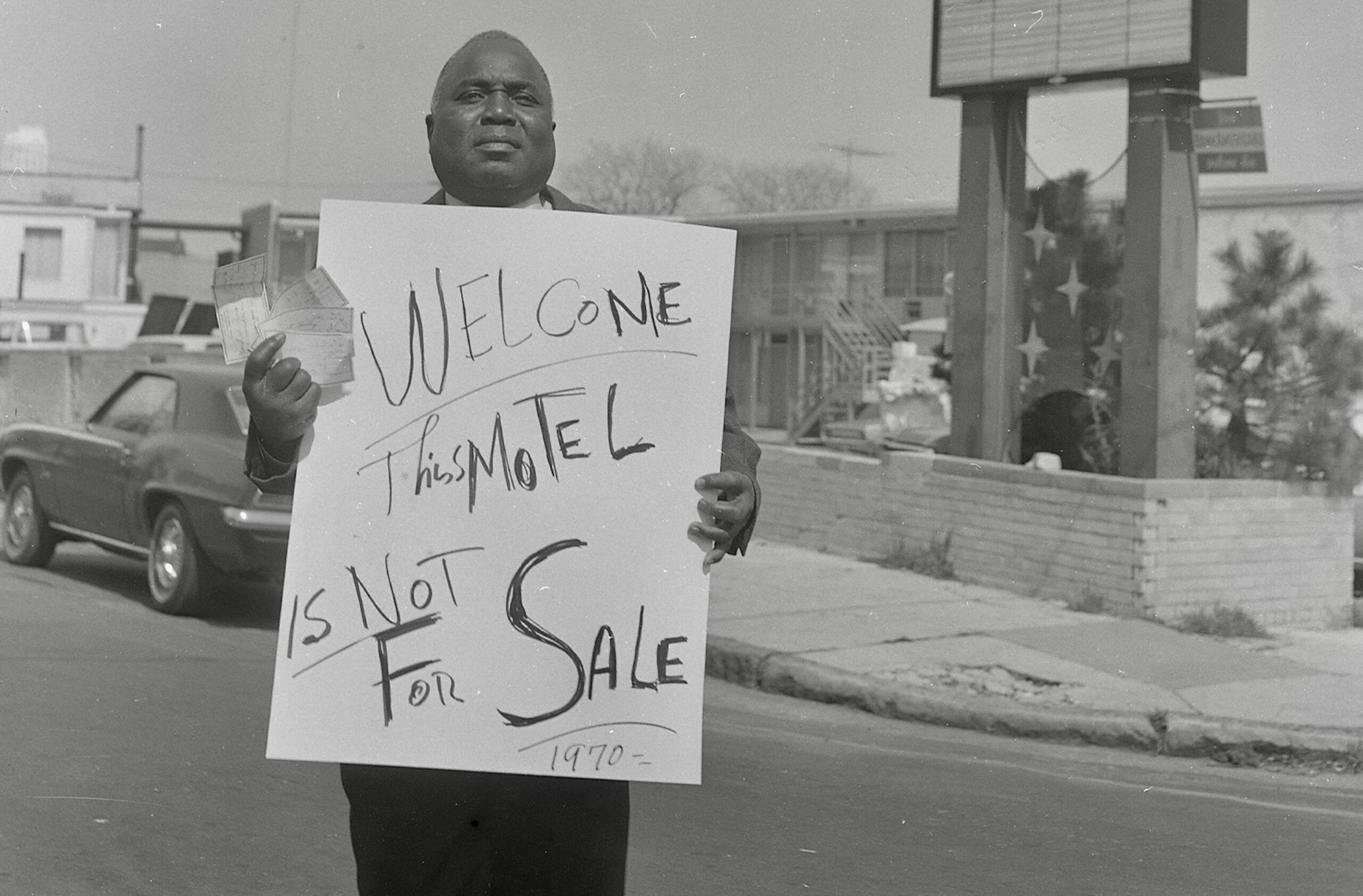
The coda is the fight to make The Lorraine a historical monument and the journey Walter Bailey and those who came after him took to keep the building upright and not torn down. After all, it isn’t just brick and mortar. It’s history, both good and bad. Told in a concise 84 minutes (not too short, not too long—just right) and punctuated by those who lived through an era when a tiny motel became a symbol of struggle. MLK’s presence still lingers in the motel, forever tied to the room the Baileys gave him.
This is a small, historical documentary whose mission is bigger than it seems. Adult audiences, likely watching on PBS, will be grateful that this epoch in time has been preserved. Especially when teaching Black history in schools has become controversial. In that way, telling this story is remarkable and precious.
For more information about the Tribeca Film Festival go to: https://tribecafilm.com
Visit Film Critic Dwight Brown at DwightBrownInk.com.