(**1/2)
Looks like satin. Feels like polyester. Yet many will go window shopping and like what they see.
Twenty years ago, The Devil Wears Prada received two Oscar nominations: Meryl Streep for Best Actress and Patricia Field for Best Costume Design. It earned a respectable $326,588,371 at the international box office and became the fashion statement film. Original director David Frankel is back along with OG screenwriter Aline Brosh McKenna and most of the major cast. Can they freshen up a funny, 20-year-old satire that poked fun at frosty magazine editors like Vogue’s Anna Wintour? Can they give an old formula new life and a stronger emotional core? Or will what once felt novel feel hollow the second time around?
A lot has happened since 2006. COVID, remote work and a more humanistic approach to workplaces once ruled by tyrants has changed office behavior. In that way Miranda Priestly’s (Streep) Marie Antoinette-style management at Runway magazine feels like a relic, as does her over-attentive and very style-driven art director Nigel Kipling (Stanley Tucci). There are missteps at the office. A major blunder leads publisher Irv Ravitz (Tibor Feldman), egged on by his freeloading son Jay (B.J. Novak), to bring in fresh blood.
McKenna’s script sets up a major problem early on. It’s just enough of a plot piece to shake up the past and introduce the old guard to the future. Opening scenes capture New York’s metro-style hustle and bustle. Everyone dresses as if they instinctively understand the snooty dress code—look like a stylish New Yorker (costume designer Molly Rogers, Sex and the City). Bright sunlight gleams off skyscrapers and glass-walled offices. As the ladies walk out of limos into Milan Fashion Week, their swagger is captured as if they’re warriors headed out to battle (cinematographer Florian Ballhaus, The Devil Wears Prada). Music inflames scenes in the glossiest ways (Theodore Shapiro, The Devil Wears Prada). The tone and feel mirror the first, but have less shine.
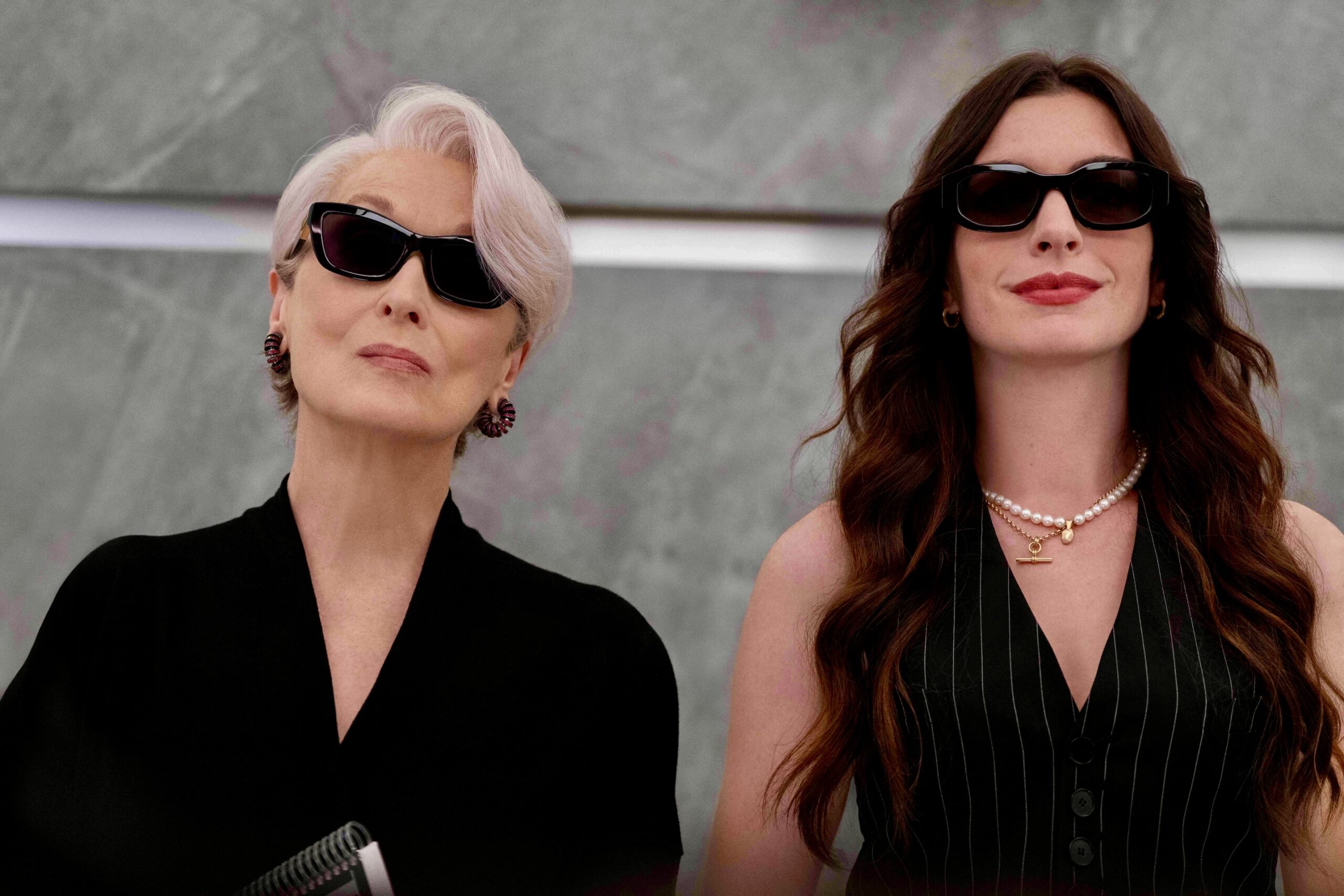
The old Runway intern Andy (Anne Hathaway) is not the same. She’s become a serious journalist, someone Irv holds in high regard as he surprises Miranda with a new features editor. Andy gets a frosty welcome. Nigel says, “Look what TJ Maxx dragged in.” Her first days in the office are a string of errors, and not the comic kind. The old guard sees the new guard and tries to ignore the implications. Can’t they all just get along? Another former lackey, Emily (Emily Blunt), has also had a career change. She’s now a big deal at a big fashion house and the Runway team has to cater to her. Emily: “If there are no advertisers, there’s no Runway.” Can she be trusted as she rekindles her relationship with Andy? What could go wrong? What could go right?
The overarching theme is that the print publishing landscape has changed, the digital world has taken over, and AI is breathing down its neck. If folks don’t adapt, the media conglomerates that run everything will run over them. Miranda’s tenure is bright one day with possibilities and bleak the next with the subterfuge that comes with doing business and having ambitious rivals. If she can’t hold on to her job, those under her are in a world of trouble. In that way the narrative taps into modern times and career fragilities that haunt many in the workplace these days.
It’s easy for female viewers to relate to Andy’s modern woman issues. She tries to balance a career with an almost non-existent love life. Confiding in BFs like Lily (Tracie Thoms), who seem to have their lives more together. There’s something very astute, inquisitive and intuitive about the way Hathaway decides to portray the protagonist. And as the interloper navigates around her old stomping grounds, there’s a new dynamic. Her know-it-all boss is now as vulnerable as she.
Streep seems somewhat constrained as Miranda, like she’s still finding ways to interpret how this Wintour wannabe might behave in the 2020s. Tucci has dialed down the bitchiness that plagued Nigel in the first chapter. He seems more human, concerned and in charge. Toning him down was a smart move. Blunt’s Emily is a campy saboteur. The quartet has great chemistry, but it’s hard to feel invested in any of their emotionally detached characters. A long list of celebrity cameos will hold a bunch of surprises for the audience.
The other theme in play is that socially conscious women need to stick together to beat out the old boy’s network that now rules business empires. The introduction of the mega-wealthy Barnes couple with Benji (Justin Theroux), an airhead egotistical billionaire, and his brainy wife Sasha (Lucy Liu), who’s ready to define her own life, adds a new dynamic. They’re played like they could be Bill and Belinda Gates, and that depiction couldn’t be timelier.
Even with the updated plotting, this narrative feels redundant. There’s a healthy nostalgia for the original fashion wars. Though once this venture ends, it’s hard to imagine a chapter three being in the pipeline. Old fans may get enough of what they want. New viewers might break into two camps: in this age of inflation and chaos, they may see the fashion world as frivolous or the perfect escapist antidote.
There’s something very stodgy about Frankel’s directing style. Few scenes have verve and often plod along as if they’re stuck in the 2000s. However, the footage gains momentum leading up to the Milan shows. Then, at some point, Lady Gaga appears in a segment and sings and dances through her new dance hit “Runway.” The pacing picks up (editor Andrew Marcus, Howard’s End) and excitement enters. But if you’ve seen the music video for the song, with Lady Gaga and Doechii playing around, as directed by Parris Goebel, you know how even more electric this passage could’ve been. And if that kinetic energy had been sustained up until the end, chapter two would might been better than chapter one. Also, the segment with Madonna’s classic song “Vogue” blasting in the background is another oasis of vitality.
Modern themes creep into TDWP2 as former colleagues unite for one more escapade. While loyal fans of the original will flock to theaters, new moviegoers might be flummoxed by what they encounter. The film might feel polished but artificial—more polyester than satin.
Photo by: Macall Polay
Trailer: https://www.youtube.com/watch?v=e9HXmMnUEdE
Visit Film Critic Dwight Brown at DwightBrownInk.com.