(***1/2)
It’s a soldier’s story.
Veterans in this poignant documentary revisit their past and contemplate the present as writer/director J.M. Harper archives their experiences. Home life, combat and the aftermath of the unpopular Vietnam War are up for discussion. Grainy Super 8 footage shot in the 1960s, other archival footage, present-day interviews and compelling reenactments vividly share the details in this carefully assembled scrapbook.
Editors Byron Leon, Niles Howard and Gabriela Tessitore weave the material together seamlessly. The back-and-forth between times and places is fascinating and easy to follow. All elements are elevated by a musical soundtrack that embodies times gone by. Old soul music blares throughout, with feisty toe-tapping songs by James Brown that evoke the rebellious feel of the 1960s Black experience. The more calming, moody sounds of Jimmy Ruffin’s “What Becomes of the Brokenhearted” articulate their thoughts: “As I walk this land with broken dreams, I have visions of many things. But happiness is just an illusion, filled with sadness and confusion…I know I’ve got to find, some kind of peace of mind.” The music becomes a spiritual guide, connecting the young soldiers to the lives and communities they left behind. Even overseas, it kept home within reach.
Back in the ’60s, when they were young, these men dealt with racism and segregation in the United States. Martin Luther King’s assassination was a devastating blow to humanity and their sense of self. Then Robert F. Kennedy’s assassination compounded their despair. Despite the gains of the civil rights movement, equality remained elusive. The chaos was obvious; the solutions not so much.
One by one, and sometimes collectively, the survivors deliver testimony as compelling as anything heard in a formal inquiry. These are stories the government or the press should have sought out decades ago. In Vietnam, bigoted commanding officers and fighting the Viet Cong put them under pressure. Fighting and killing brown-skinned people was a perplexing part of their job—like it or not. Then those who’d risked their lives and could come home on their own two feet, and not in a casket, returned to an indifferent and disrespectful America. That was the final insult. Anger, sadness and frustration followed. The boys became men; the men became elders, and the wisdom of their experiences became indispensable.
Audiences may not hear it explicitly, but the parallels between the treatment of Black soldiers then and now are alarming. These heroes’ achievements received little fanfare, as if they were invisible. Years later, the current controversy over the Department of Defense’s removal of historical content celebrating minority veterans raises troubling questions about how much America has learned. After so much progress, with Black service members reaching the highest ranks, their accomplishments and contributions deserve recognition, not erasure. Seeing and hearing what happened back then makes today’s issues all the more apparent. It’s another reason this enlightening documentary has such far-reaching significance.
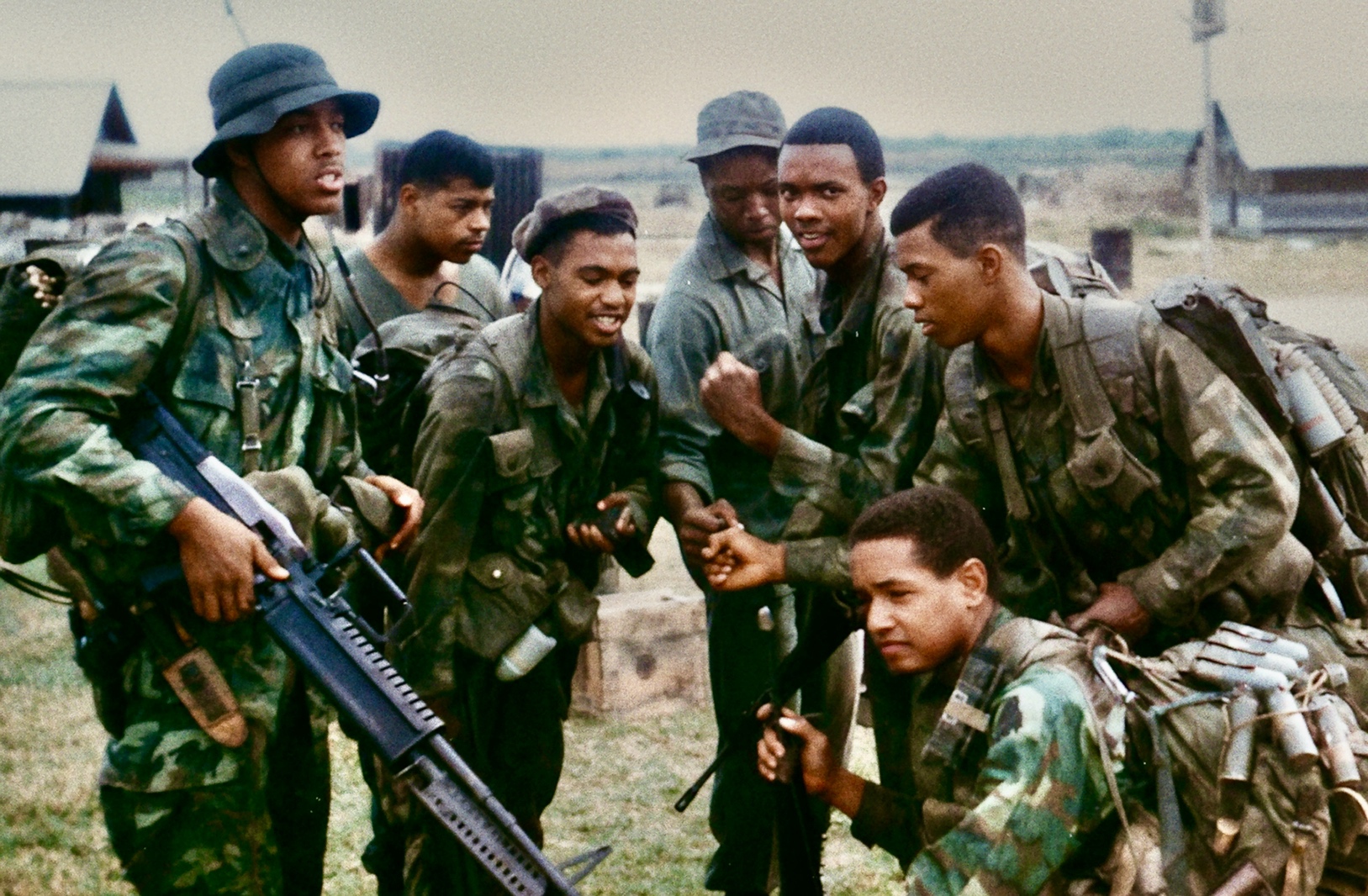
The joy and camaraderie forged in barracks, bunkers and on battlefields break up the sobering tone of this historical war documentary. The members of the Vietnam War’s first special operations all-Black Long Range Reconnaissance Patrol (LRRP) unit found happiness in their friendships. The brotherhood that began in their teens and twenties has endured into their 80s. As the veterans reflect on their PTSD, share anecdotes and reveal their struggles, the footage becomes therapeutic. It’s a cleansing experience, one that has a healing effect and will warm viewers’ hearts.
Harper’s thoughtful direction is evident in the way he brings the veterans together. He gives them room to reminisce, express themselves and reclaim the dignity they were once denied. He keeps the proceedings engaging, sets the stage then builds curiosity before embracing the reunion and its cathartic moments. He wisely guides the dramatizations, too. Haunting scenes featuring young actors Myles Simms-Aur, Okea Eme-Awari, Deion Smith, Elijah Richardson and Michael Oloyede unfold in dense, tropical jungle-like surroundings, carry an Apocalypse Now vibe. The silence as the reenactment soldiers stare into the distance is eerie and speaks volumes.
The unfairness of it all is duly noted and catalogued. Logan Triplett’s sensitive cinematography captures every smile, tear or embrace. Audiences become witnesses to the bad and the good. They’ll appreciate the honesty and forthrightness that these old soldiers carry like a survival kit. They speak their truths right up until the end. They don’t hold back. They lay their heavy burdens down. “We busted our asses to kill and got nothing for it!” “I relive that mission every single day of my life!”
The history of these unsung heroes was first recorded by one of their own, Ed Emanuel, in his 2003 memoir, Soul Patrol. That book helped reunite the men who’d lost touch over the years. Now their journeys have been sensitively and respectfully chronicled for the screen by filmmaker J.M. Harper.
After the final credits roll on this soldier’s story, expect audiences to collectively say, “Thank you for your service.”
Trailer: https://www.youtube.com/watch?v=D8LIYqag82E
Photos courtesy of the Sundance Film Festival and Kino Lorber
Visit Film Critic Dwight Brown at DwightBrownInk.com.