Read the room.
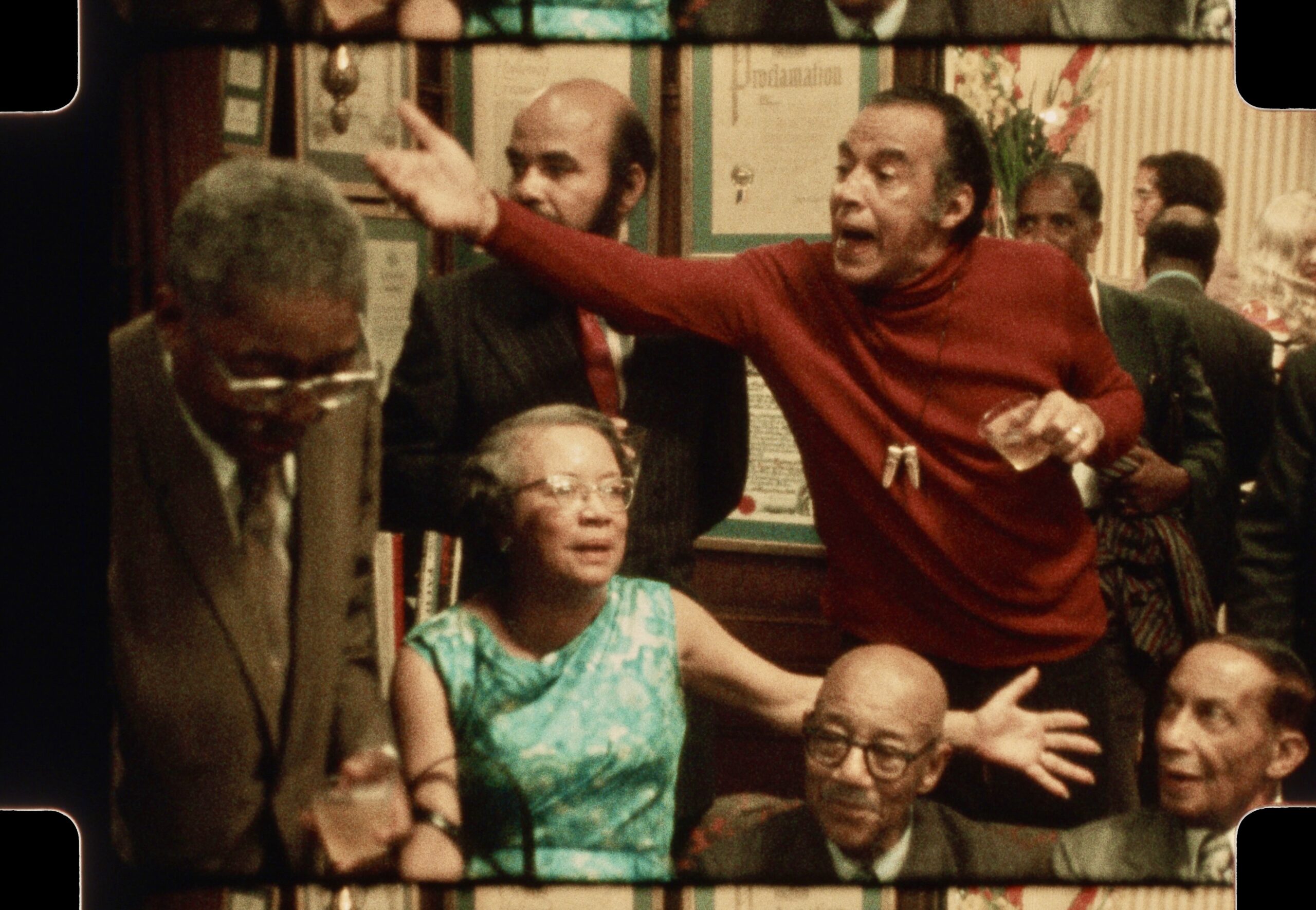
Intellectuals, artists, politicians, librarians and others gather in 1972 at an NYC brownstone owned by Duke Ellington. They discuss politics, history, and culture—the past, present and future—as they relate to the Harlem Renaissance. One participant sums up his credentials: “The Renaissance period was a period through which I lived!” Hard to gauge who’s the most intelligent, expressive or aware in the bunch. They all give as good as they get, each expressing their personal views, experiences and observations at a scholarly level generally reserved for Ph.D.s.
Race and other issues facing the African American community get an intense examination that’s filtered through the prism of the 1920s Renaissance. At this gathering, filmmaker William Greaves captured the profound conversations. After Greaves died in 2014, his son David took on the project. Working with co-director and producer Liani Greaves and editors Anne de Mare and Lynn True, he brought his father’s dream project to completion.
Harlem’s who’s who share anecdotes and memories in a perceptive, head-spinning informal roundtable. Voices rise, not in anger but to emphasize points. Greaves’ original 16mm camerawork is so inviting that audiences feel like welcome guests, privileged to listen as they absorb the conversations. Viewers will likely feel honored to be in the company of showman Eubie Blake, artist Romare Bearden, Ida Mae Cullen (widow of Harlem Renaissance poet Countee Cullen) and photographer James Van Der Zee, among others. Revelations flow for a captivating 100 minutes.
One of the most astonishing stories belongs to actor Leigh Whipper, who was in his 90s at the time. Remarkably alert, he recalls working in minstrel shows, vaudeville and drama before helping establish the groundbreaking Negro Actors Guild. Another unforgettable moment comes when an attendee reveals that his mother was a slave. A hush falls over the room—and will fall over theater audiences, too—as the gathering’s enormity becomes evident. Wisdom about Marcus Garvey’s Back-to-Africa movement and whether to use the terms Negro, Black or African American are debated. Also of note are playwright Regina Andrews’s recollections of writers who found refuge in the 135th Street Branch of the New York Public Library, where she was a librarian. The 135th became the first NYPL branch with an integrated staff and housed the Division of Negro Literature, History and Prints, established in 1925.
Grainy footage takes you back 50 years. Black-and-white photos, archival images and paintings transport viewers to the heart of the 1920s Harlem Renaissance, when a burst of creativity in art, music and literature both reflected and helped reshape American culture. Like they were piecing together a quilt, the directors, producers and editors clipped a three-hour gathering down to a 100-minute theatrical movie that preserves the original footage as a cultural touchstone. One with a rhythm as steady as a bass in a jazz trio. Toward the end, when the pace flickers a bit and momentum wanes, another stream of thought saves the day, and length issues disappear. Composer Tamar-kali finds the right music to bridge the gaps between the ‘20s, ‘70s and present day. The music and sounds envelop you.
A son’s determination to fulfill his father’s artistic vision is a product of tenacity and focus. Completing the project was a gargantuan undertaking that had eluded others. Capturing the spirit of that day in a way that appeals to current adult viewers is a testament to good instincts in documentary filmmaking. What’s been left on the cutting room floor is not missed. What’s on screen is so relevant today in the most casual yet deliberate ways.
For those curious about the Harlem Renaissance and its creators, including legends like Zora Neale Hurston and Langston Hughes, this immersive film offers a rewarding journey through a cultural revolution that rejuvenated a neighborhood and influenced future generations. It will appeal to audiences in theaters or in PBS-style programming, where history is examined and appreciated and wisdom is revered: “There are those of us who are now old, who have struggled, had no civil rights and worked. Some of us died doing it.”
Reach into the past through firsthand accounts, explore a cultural explosion and meet those who ignited it. Then reflect on what you’ve learned. That’s what’s superlative documentaries do.
What began more than 50 years ago arrives right on time. It’s a treasure. A national treasure. Everyone will know when they read the room.
Trailer: https://www.youtube.com/watch?v=ESnX3LQbCVI
Photo courtesy of the Toronto International Film Festival
For more information about the Toronto International Film Festival, go to https://tiff.net/.
Visit Film Critic Dwight Brown at DwightBrownInk.com.