(***1/2)
“Who’s in charge? We’re in charge!”
U.S. Representative Alexandria Ocasio-Cortez’s call to action sums up the lessons offered by Ava DuVernay’s illuminating, rousing documentary. Learn the virtues of the 14th Amendment, take its lessons to heart and put them into action. When the film sticks to that theme, it’s on message, informative and brilliant. When it wanders, it takes away from its core.
This production is a follow-up to the 2016 documentary 13th. That film examined the legacy of the U.S. Constitution’s 13th Amendment, which abolished slavery, and its relation to the mass incarceration of Black Americans today. This project reveals that the cornerstone rights under the 14th Amendment are under threat. But its foundation is still intact enough so viewers can see what was, what is and what could be.
Passed by Congress on June 13, 1866, and ratified by the states on July 9, 1868, the 14th amendment emerged from Reconstruction to establish citizenship and equal protection for formerly enslaved people while placing constitutional limits on the states. This film traces the amendment’s central principles and the framers’ efforts to anticipate how Southern states might undermine the new rights of freed Black Americans. In particular, this production highlights key provisions of the amendment, including birthright citizenship, due process and the clause addressing disqualification from office for insurrection for people who previously swore an oath to support the Constitution.
Those basic talking points prompt discussion, anecdotes, observations and calls to action. Over its 108 minutes, the film examines the amendment’s origin, significance and implementation. Its splintering interpretations and uneven enforcement are also exposed with urgency. It’s like a tag-team lecture in which no one will pass the exam without listening, pondering and processing the repercussions.
Wisely, this project has assembled a bright, multicultural, bipartisan group of experts. Among the most versed contributors is Sherrilyn Ifill, founder of the 14th Amendment Center for Law & Democracy and Vernon Jordan Jr. Distinguished Professor in Civil Rights at the Howard University School of Law. Activist Stacey Abrams offers an insightful perspective on contemporary implications. The most circumspect may be retired GOP Senator Jeff Flake (R-AZ), who’s been critical of the current Republican Party and administration.
Comic interludes provide oases in the midst of sobering historical accounting, as socially conscious comedians use humor to address immigration, racism and civil rights. George Carlin, Hasan Minhaj, Ronny Chieng and the thunderously funny Paul Mooney offer comic asides amid the serious discourse. Mooney jokes about white racism: “They don’t want us in their neighborhoods, but when we were slaves, we lived in their houses!”
The film highlights Reconstruction’s achievements: Black colleges, businesses and publications emerged and flourished, while more than 1,000 Black men held public office between 1865 and 1877, according to historian Eric Foner. Setbacks and horrific tragedies are documented too, including efforts to eliminate Black representation through redistricting and other forms of political disenfranchisement, the 1921 Tulsa Massacre, thousands of lynchings and subversive propaganda by the United Daughters of the Confederacy.
As the film becomes more personal, it becomes more compelling and less like a class. According to the information presented, when Virginia Governor Ralph Northam asked for help dismantling Robert E. Lee’s monument in Richmond, white contractors turned him down. Devon Henry, who ran a Black-owned construction firm responsible for removal projects, took the job despite threats to him and his family. Henry is the epitome of an everyday hero, risking his safety to help bring change. His actions embody the activism the film views as necessary to advance the spirit of the amendment.
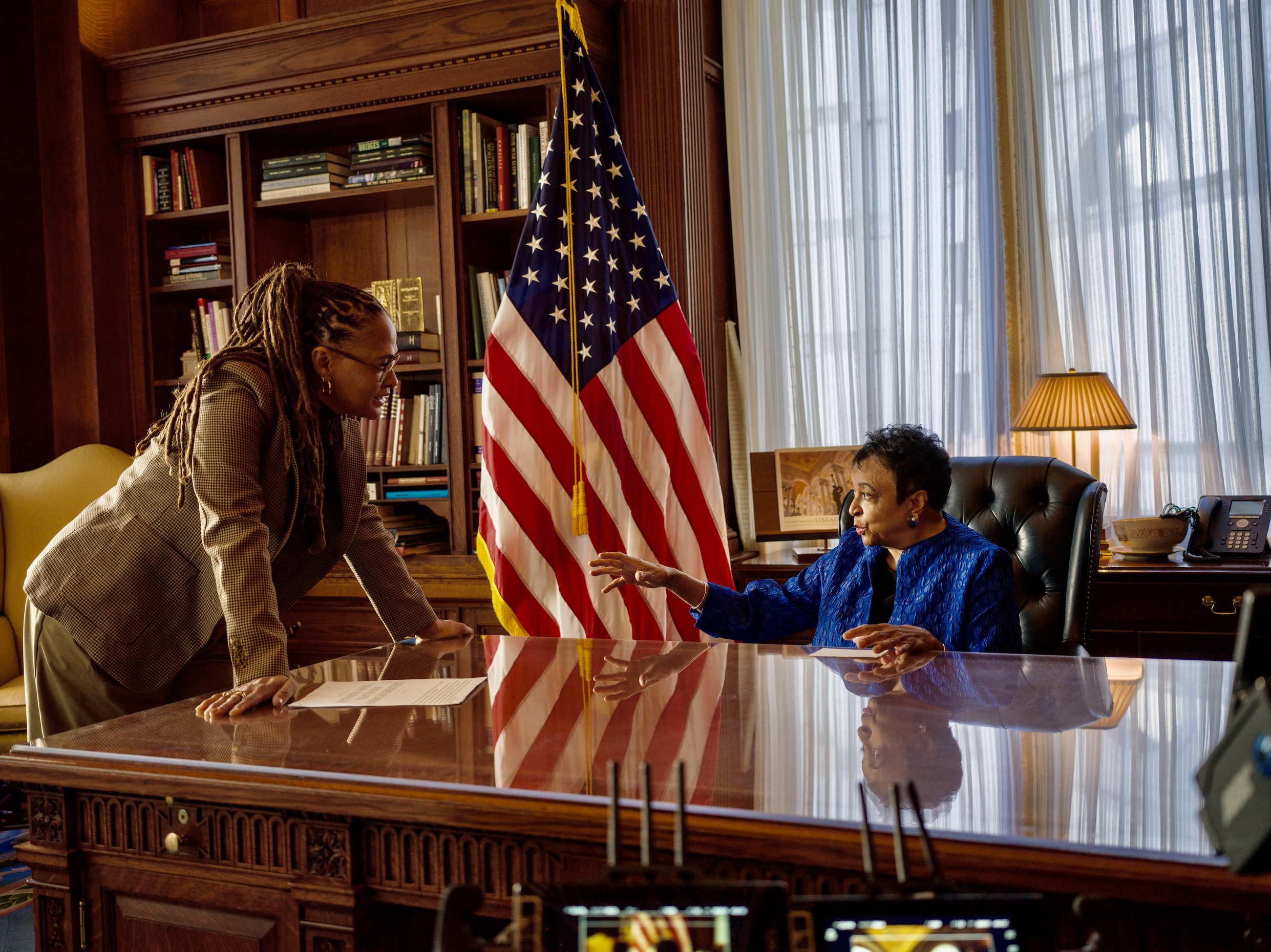
DuVernay is the consummate facilitator. She brings knowledgeable contributors together, makes them comfortable in their surroundings and lets them speak their truths. Some are stiff. Some political. Others specialize in history or current events. It’s a lot for an audience to absorb, but its main arguments are understandable and have a sense of concern and urgency that’s maintained for the film’s length.
If there’s an error in approach, it’s the moment the current president’s on-screen remarks interrupt the film’s momentum. The film has built its case commandingly, weaving history together with the present day. The intrusion is jarring. Viewers can connect the dots: rights like birthright citizenship are under attack, and the principal actors are identifiable. And, more attentive viewers will recognize that all three branches of government have roles in constitutional disputes. Let viewers do the homework and apply what they’ve learned. The teacher doesn’t have to do the assignment for them.
Kinetic graphics keep the footage from feeling like a mere PowerPoint presentation, while photographs, archival clips and interviews add visual variety. Jason Moran’s (Selma) score features percussively plucked string instruments, a driving bass and steady drums that push the pace. Music by Robert Glasper and Brittany Howard adds further texture to the soundtrack. Cinematographers Clifford Charles and Michael Fernandez (Daughters) give scenes a polished look. Editor Spencer Averick (13th) brings sequences together cohesively.
This largely academic approach may appeal to teachers, students and intellectuals, but it risks missing a broader audience that could benefit from its message. Borrowing from Michael Moore’s more street-level approach might have made the material even more accessible. Moore employed this style in Fahrenheit 9/11, which reached a broad audience and grossed approximately $222.4 million worldwide.
Knowledge and civic engagement seem to be the way forward in DuVernay’s perceptive documentary. Its closing message echoes Ocasio-Cortez’s declaration: “Who’s in charge? We’re in charge!”
Photo courtesy of Netflix.
For more information about the New York Film Festival go to https://www.filmlinc.org/nyff/
Visit Film Critic Dwight Brown at DwightBrownInk.com.