(***1/2)
¡Viva la revolución! ¡Viva Luis Valdez! That celebratory tone defines David Alvarado’s documentary portrait of the father of Chicano film and theater, Luis Valdez.
Most know Valdez as the writer/director of the biofilm La Bamba, the story of the singer Ritchie Valens. But the filmmaker/playwright has roots that go far deeper into the Mexican American community than that. At 85 years old, he can look back at his achievements and be proud of what he’s accomplished. Something akin to the groundbreaking deeds of César Chávez, only in performing arts.
Documentarian David Alvarado (The Immortalists) assembles a formidable group of artists who attest to Valdez’s audacity and inventive ways: Oscar nominee Edward James Olmos (Stand and Deliver) narrates, as he should considering he was the lead in the director/ playwright’s iconic musical and movie Zoot Suit. Lou Diamond Phillips, who played Valens in La Bamba, lauds the director from an actor’s point of view. Grammy-winner Linda Ronstadt, legendary comedian Cheech Marin and famed director Taylor Hackford (Ray) give touching tributes. Brothers, sisters and friends add their personal interactions. What’s on view is like a photo album that covers a lifetime. It’s also an enlightening retrospective on the evolution of Chicano theater and film.
Editor Daniel Chávez-Ontiveros, archival producer Jennifer Petrucelli, music composer Eduardo Arenas, sound design/mixer Peter Albrechtsen and cinematographer Zachary Fink work in seamless sync with Alvarado. You never question what you’re seeing or hearing as it only adds to the Valdez persona, which is so Mexican and American all at the same time. Born in 1940, he was the second of 10 children of Armeda and Francisco Valdez in Delano, California. Mom and dad were migrant farmworkers and at age 6, Luis was in the fields picking cotton and tomatoes alongside them. Going from place to place and school to school stopped when the family settled in the San Jose area.
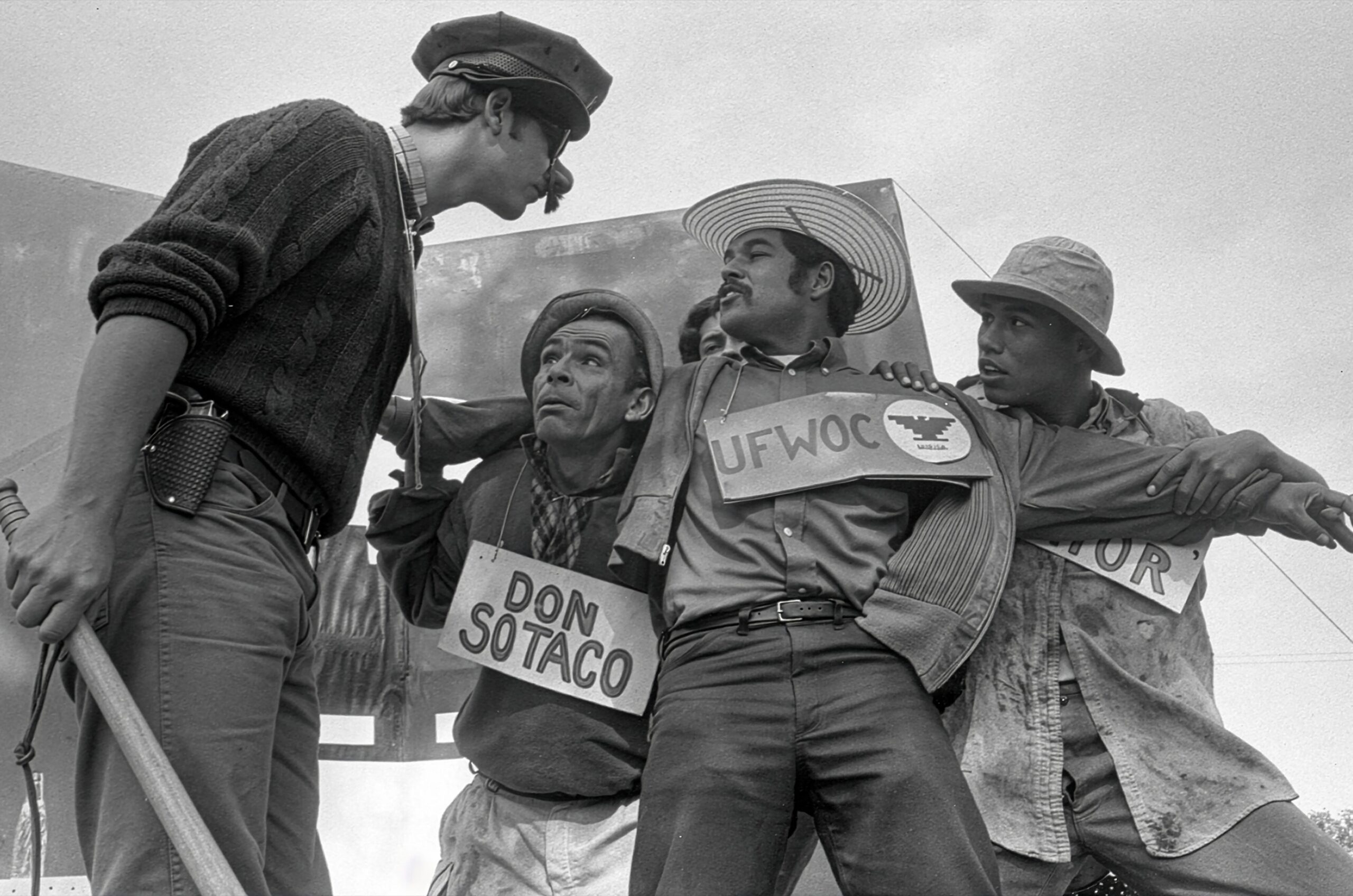
School plays and puppet shows were a mainstay of his early years. In college at San José State University, his career ambitions changed when he gravitated towards playwriting and wrote his first full-length theater piece The Shrunken Head of Pancho Villa. It took a surreal artistic approach to its social/cultural commentary about Chicano life. A theme he cemented early on and carried on throughout his career when he started “El Teatro Campesino” (workers theater). It was a troupe which Valdez created to help his old childhood friend CC (César Chávez). That group organized farmworker protests into more theatrical and attention-getting public events.
Photos and footage depict Valdez organizing marches, animating participants and encouraging the use of instruments so performance art could help the cause. Valdez’s first big achievement was Zoot Suit. It’s a musical drama about the “Sleepy Lagoon” murder trial in the early ‘40s that exacerbated racial tensions between the police and Chicano community. After running at the Mark Taper Forum in L.A. in 1978, it opened in New York, making Valdez the first Chicano director to have a premiere on Broadway. Watching his career’s evolution is as fascinating as hearing from the man himself. Audiences will likely admire his humble but confident manner. They also need to be prepared for the thorough onslaught of history that makes this doc more educational than entertaining. Traditional in format, not innovative but solid doc filmmaking.
Valdez knows what he’s done: “My works speak for themselves. They happen to speak for a lot of other people.” His assessment is corroborated over and over again in interviews with others who have felt his genius. The steady narrative voice of Olmos pulls you through the history. He traces the demeaning ways Mexican American people have been oppressed, their ability to thrive nonetheless and emerge as an integral part of modern America—especially in California. The bio facts and cultural implications are augmented by Valdez’s personal life. The way he dealt with family, siblings and some who tried to anglicize themselves away from their roots. One of the biggest blessings in Valdez’s life is his wife, fellow-actor and co-creator Lupe, and she reflectively reveals the workings of their familial and professional partnership, in ways many couples will comprehend.
The blend of old photos and footage, clips from movies and theater performances is bountiful and full of history that verifies that Valdez was born at a time and into a situation that required revolutionary thinking. Ingenuity, identity and the love required to make performance art reflective and supportive of the Chicano community. Valdez stood and delivered. This is his unique story.
Artfully and comprehensively, documentarian David Alvarado has recorded Luis Valdez’s journey as a filmmaker and playwright. His well-crafted bio/doc spotlights a griot in the Chicano community who deserves the adoration. ¡Viva la revolución!
Photos courtesy of the Sundance Institute and The Tom & Ethel Bradley Center at California State University, Northridge.
For more information about the Sundance Film Festival go to: https://festival.sundance.org
Visit Film Critic Dwight Brown at DwightBrownInk.com.